
Table of Contents
ToggleDo Chargers Use Power When Not Charging?
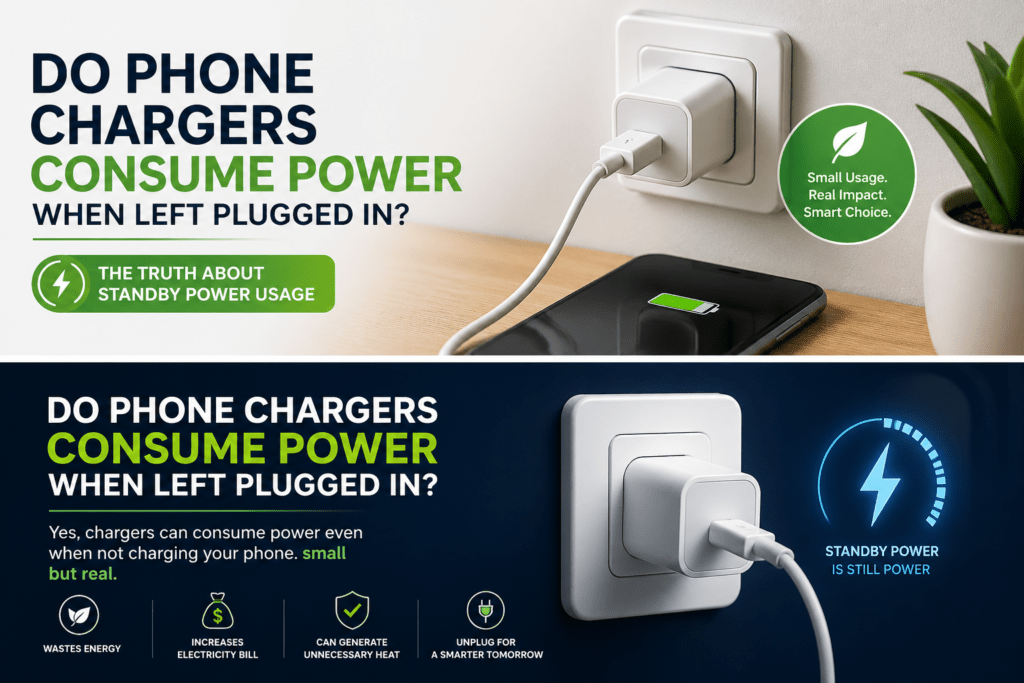
Yes, phone chargers do consume a small amount of electricity even when they are plugged in but not connected to a device. This is often called “phantom load” or “vampire power.”
Inside every charger is a small circuit that remains active as long as it’s plugged into the socket. Even if your phone isn’t connected, this circuit draws a tiny amount of power.
How Much Electricity Are We Talking About?
The amount of electricity used is very small.
Most modern chargers consume around 0.1 to 0.5 watts when left plugged in without a device. To put that into perspective:
- Leaving one charger plugged in all day for a year may cost only a few rupees.
- Even with multiple chargers in your home, the total cost is still quite low.
So, while it does use power, it’s not something that will drastically increase your electricity bill.
Why Does This Happen?
Chargers are designed to be ready whenever you plug in your device. To do that, they maintain a small flow of electricity through internal components.
It like a TV on standby mode—it’s not fully “off,” just waiting to be used.
Is It Dangerous to Leave Chargers Plugged In?
While most modern chargers are safe, especially branded ones, leaving them plugged in continuously can have a few risks:
- Heat buildup: Cheap or low-quality chargers may overheat over time.
- Fire hazard: Faulty wiring or damaged chargers can increase risk.
- Power surges: Sudden voltage spikes can damage the charger.
If you’re using high-quality chargers, the risk is low—but it’s still a good habit to unplug when not in use.
What About When Your Phone Is Fully Charged?
Even when your phone reaches 100%, the charger doesn’t completely stop drawing power. It switches to a maintenance mode to keep the battery topped up.
This uses slightly more power than when the charger is idle—but still not a large amount.
Does This Affect Your Electricity Bill?
Very less power consume. It’s negligible.
In a typical home, there are many devices that draw phantom power:
- Chargers
- TVs
- Set-top boxes
- Wi-Fi routers
- Microwaves
Together, these can account for 5–10% of your electricity usage over time.
So while your phone charger alone isn’t a big deal, it’s part of a bigger picture.
Good habit to avoid more power consumption
If you want to reduce unnecessary power usage, here are some easy steps:
- Unplug chargers when not in use
- Use power strips with switches to turn off multiple devices at once
- Buy good quality chargers with energy-efficient designs
- Avoid leaving damaged or overheated chargers plugged in
These small habits can make your home safer and slightly more energy-efficient.
FAQ (Frequently Asked Question)
1.Do phone chargers use electricity when not connected to a phone?
Yes—but only a tiny amount. When a charger is plugged into a socket without a phone attached, it still draws a small “standby” or “phantom” load.
- How much power are we talking about?
Very little. Most modern chargers consume less than 0.5 watts when idle. Over a month, this adds only a negligible amount to your electricity bill.
- Why does it consume power at all?
Chargers contain internal circuits that remain active as long as they’re plugged in, ready to supply power instantly when you connect your device.
- Does it affect your electricity bill significantly?
Not really. Even if you leave multiple chargers plugged in all the time, the cost increase is usually minimal compared to larger appliances like ACs or refrigerators.
- Is it safe to leave chargers plugged in?
Generally yes, especially with certified chargers from brands like Apple or Samsung.
However:
- Poor-quality or counterfeit chargers may overheat
- Power surges can damage plugged-in devices
- Can leaving chargers plugged in reduce their lifespan?
Over time, yes. Continuous exposure to electricity and heat can slightly degrade internal components, though it’s usually a slow process.
- Should you unplug chargers when not in use?
It’s a good habit because:
- Saves a small amount of energy
- Reduces fire risk (especially with low-quality chargers)
- Helps prolong charger life
- What’s the best practice?
- Unplug chargers when not in use if convenient
- Use high-quality, certified chargers
- Avoid overloading sockets or extension boards
- Are newer chargers more efficient?
Yes. Modern chargers (especially fast chargers) are designed to minimize standby power usage and improve energy efficiency.
- Bottom line
Leaving a phone charger plugged in won’t drastically raise your electricity bill—but unplugging it is still a smarter and safer practice.
Pingback: Why Your Electricity Bill Is Suddenly High - Electricalsphere